
I love to read. I typically jump around from one genre to another depending on my mood. Recently I’ve been trying to challenge myself to add more self-help and educational books to my rotation. With that in mind, I want to make sure I write reviews of these types of books for two reasons: one, so I can come back and revisit the lessons I was able to take away from them. Two, by giving you my opinion of the book you can decide for yourself whether it is something you might want to read too!
Something else I should note is that I rarely ever buy books anymore. I am lucky enough to live near at least five Little Free Librarys that are always well stocked. Score!

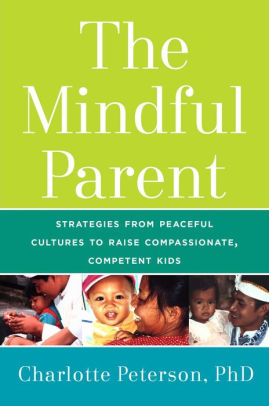
About a month after the birth of my second daughter I found The Mindful Parent in one of those libraries. At our Co-Op Preschool for my older daughter there had just been a lesson on mindfulness, so it really seemed like me reading this book was meant to be.
I wish I could say that I loved this book, because Mindfulness is a really hot topic right now and I was looking forward to learning ways that I could be more mindful and present in my own parenting. Unfortunately I think timing of when I read the book and my expectations on what I thought it was going to be about contributed to my not really liking the book very much.
I thought the book was going to be a step-by-step guide on how to actually be a mindful parent. That it might give lots and lots of tips on parenting techniques that would be situation specific. For example, when your toddler takes a rock and scratches up the outside of your car, maybe it would explain how a mindful parent would approach the situation.
While the book does give some overview and good pointers on how to parent mindfully for various ages, there was a much greater focus on what is wrong with the American system of parenting and childcare as a whole. While I can appreciate many of her sentiments and agree with much of what she was writing, the problem I had was that as a new parent there just isn’t much I can do about the larger societal problem. I needed and wanted actionable items I could incorporate into my life now. When reading on and on about how other cultures parent more mindfully (and thus better than we do, according to this book), it just made me feel inadequate and guilty about what I couldn’t or didn’t provide to my children; definitely not something I needed while newly postpartum. But enough of my sob story . . .
Below is a more detailed breakdown of what I gained and what I didn’t like.
Positive Lessons:
“Balance” is vitally important because it helps parents remember to balance the baby’s needs with those of other children in the family and also the parents’ own needs. In attempts to meet a baby’s needs, along with those of their other children, jobs, and home, some dedicated parents forget to care for themselves and their own relationships. This lack of self-care can quickly lead to exhausted, depressed parents, and stressed marriages. It is essential to balance the baby’s needs with those of others in the family.” [Page 83]
- I loved reading this because I think balance really is one of the most important, but also most difficult to achieve, elements of parenting (or life in general for that matter!) It was especially important for me to read this when I did, since I was only about a month postpartum and it can be really hard for me to keep a level head until I am a few more months out.
Quote by Dr. Vivian Olum, “the person in the family acting least lovable at any given moment is usually the one needing the most!”
- I need to tape a printout of this on my bathroom mirror and then go in and read it any time one of my family members is getting on my nerves!
“It is never possible to parent without making mistakes. When you’ve done something that creates hurt and distance between you and your child, the most important parenting tip to remember is always reconnect with your child as soon as possible.” [Page 89]
- I LOVE THIS! This quote was a very good reminder that although I may lose my cool from time to time (I mean, let’s face it, nobody’s perfect . . . right?!??) it’s so important to get back on positive footing and talk through that difficult moment.
“In peaceful cultures it is believed that parents modeling and explaining how to express feelings is the best way for toddlers to learn culturally acceptable ways to deal with them. While American parents sometimes punish overwhelmed toddlers for having a “temper tantrum,” parents in the peaceful cultures would be more likely to try to offer support and comfort. It helps to understand that these “meltdowns” are the way that toddlers “unstress” when they feel overwhelmed, and unstressing is an extremely healthy way of releasing tension! Toddlers are not doing this to manipulate or cause suffering for their parents; they have simply been overcome with frustration or anger. It is important for parents to teach their children not to hurt themselves or anyone else when they are unstressing, without causing their kids to feel badly for having such intense feelings.” [p. 95]
- I like to keep this lesson in the back of my mind so that anytime my toddler is screaming and having a major meltdown it is easier for me to stay calm. The idea that she is merely overcome with emotion and is working on “destressing” makes so much sense and is much easier to accept than the idea that she is being manipulative and intentionally hurtful. Knowing that she needs to do this to release tension makes it much easier for me to at least try to be patient and loving in those tough moments.
“Blocking any of the four basic feelings, glad, sad, mad, or scared, can lead to later emotional distress such as withdrawal, depression, anxiety, aggression, risk taking, substance abuse, and stress-related illnesses. Invalidating our children’s feelings leads to confusion, self doubt, and an erosion of self-esteem. On the other hand, when we validate their feelings, we help them trust their own inner voices and believe in themselves.” [p. 95]
- I thought this was really valuable information. It has helped me remember to name the emotion my toddler is feeling so she can identify it and know that it’s ok to have those feelings. I’ve tried to start saying things like, “I see that you’re really (mad, sad, glad, scared) and you are having big emotions that are sometimes hard to control and that’s ok.” Of course, sometimes I have big emotions too in the same moment that she is having her big emotions so my reaction isn’t always like the one mentioned above. But hey, at least I’m trying, right?
“It’s ok to be mad, but not to be mean.” [p. 98]
- Good rule of thumb. I may need to write this on our quote board in the kitchen next time my toddler pushes that boundary. I have been saying it to her a lot recently when she gets aggressive towards her younger sister and I think it is a good reminder for us both.
“Over the years, I have had frustrated parents force teenagers into my office because their kids won’t talk to them. As the teens sat there glaring sulkily, the parents explained their feelings of despair. Whenever their teens are mad, they just go to their rooms, slam the door, and refuse to tell their parents why they are angry. When I ask these parents how they handled their kids’ anger when they were young, invariably the answer is, “Well, we’d just send them to their room until they got over it.” Parents should be careful how they teach their toddlers to deal with angry feelings if they want their children to safely communicate those feelings to them and others when they are older.” [p. 98]
- Such a good point. This will stick with me. I am already terrified for the teenage years!
“Validating a child’s fearful feelings, offering reassurance, and slowly helping her problem-solve or move herself away from the frightening situation is what helps her learn to trust that you can be counted on for support when she’s afraid. Children don’t analyze their emotions, they just feel and express them, so it’s usually not helpful at all to ask children why they are feeling or acting a certain way. Much better is to just validate the feelings you observe and the reasons behind those feelings, such as their difficulties with such things as waiting, sharing, or not getting something they really want.” [p. 99]
- So interesting; it seems so natural to ask a child why they are feeling a certain way or why they did a certain thing. This is a good reminder not to get frustrated if a child can’t articulate it yet because they are too young. It’s also another good reminder to validate feelings and acknowledge them rather than to try and get a child to stop feeling them and “get over it.”
“You will never do a more important job, or feel as needed and loved by anyone ever again as you do by your infant or toddler.” [p. 176]
- I need to make a poster with this quote on it and make sure it’s the first thing I see in the morning and the last thing I see at night. As a stay at home mom I sometimes feel like I am going crazy or am stuck in a Groundhogs Day situation. This saying would be a great way to snap me out of my funks during those bad days or moments.
Frustrations:
This book takes a deep dive into Attachment Parenting and focuses on how Peace Loving Nations parent their children. While I understand that a lot can be learned from those nations, much of how they parent is possible because of how they live (for instance, living in a home that is multi-generational and often includes cousins and distant relatives in the same family compound, with an expectation that those family members will be taking a VERY active role in helping raise that baby). The author acknowledges this a lot and indeed much of the book is an argument on how the U.S. is woefully behind other nations in providing healthy environments for us to raise compassionate and loving children.
Unfortunately, because of when I was reading this book, I was feeling a lot of guilt at not being able to provide all the things she wrote about for my new baby. This book made me feel bad for so many reasons, but worst of all was that it highlighted the things I was already feeling disappointed and upset about with my second baby. The book stresses how important pregnancy and birth are for the baby, and I was already feeling guilty about not giving as much attention to my second pregnancy as I did with my first. I was already feeling guilty about the fact that I ate so poorly I got gestational diabetes. I was already feeling guilty about deciding to schedule a c-section rather than try for a VBAC. And here this book was, telling me how much I was failing my poor child. (I know, it wasn’t really telling me that, and my amped up hormones had a lot to do with my reaction, but still, the book made me feel REALLY guilty and frustrated a lot of the time) I obviously took everything in this book way to personally, but context is an important part of interpretation. So for me, in my context, reading this book was a rather negative experience.
Overall Review:
I give this book a 3 out of 5 stars. It was worth reading, but it wasn’t life changing. I feel like it only just scratched the surface on what I can do to be a more mindful parent and how I can raise my children to be both mindful and still successful in our culture.
 Suburban Farmer Mom